


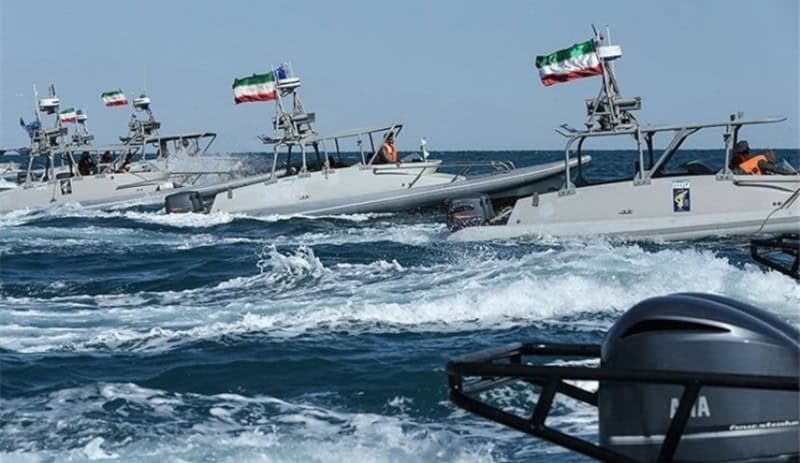
Illustrative image.
Iran is discussing with Oman how to set a permanent toll system that will formalize its control of maritime traffic through the Strait of Hormuz, the Iranian ambassador to France told Bloomberg on May 20.
“Iran and Oman must mobilize all their resources both to provide security services and to manage navigation in the most appropriate manner,” ambassador Mohammad Amin-Nejad, said in an interview with the news agency.
“This will entail costs, and it goes without saying that those who wish to benefit from this traffic must also pay their share,” he said, adding that the system will be transparent. “And if today there is any desire for the situation to improve, a solution must be found to tackle the root of the problem.”
Asked about the Iranian plan, United States Secretary of State Marco Rubio told reporters on May 21 that Washington “always said a tolling system in the strait would be unacceptable.”
“No one in the world is in favor of a tolling system. It can’t happen. It would make a diplomatic deal unfeasible. It’s a threat to the world that they would try to do that, and it’s completely illegal,” he said.
The Strait of Hormuz — responsible for around 20 percent of global oil and liquefied natural gas shipments — has very much remained under de facto Iranian control since the start of the American-Israeli war on the Islamic Republic on February 28.
Despite the objection from the U.S., Iran has been working to formalize control over the waterway through the newly-funded Persian Gulf Strait Authority (PGSA).
On May 21, PGSA declared a a “controlled maritime zone” at the Strait of Hormuz, defining it as the “line connecting Kuh-e Mobarak in Iran and southern Fujairah in the UAE (United Arab Emirates) at the eastern side of the strait, to the line connecting the end of Qeshm Island in Iran and Umm Al Quwain in the UAE at the western side of the strait.”
The authorities warned that transit through the area to pass through the strait will require coordination and authorization from the authority.
The latest developments shows that the issue of the Strait of Hormuz remains a major point of disagreement between Iran and the U.S.
Earlier this month, the U.S. attempted to challenge Iranian control over the waterway with Operation Project Freedom, but quickly backed down after a serious clash that nearly brought the ceasefire reached last month to an end. For now, Washington is keeping a tight siege on Iranian ports as a retaliatory measure.
_______________________________________________________________________________________________________________________
SouthFront: Analysis and Intelligence
NOW hosted at southfront.press
Previously, SouthFront: Analysis and Intelligence was at southfront.org.
The .org domain name had been blocked by the US (NATO) (https://southfront.press/southfront-org-blocked-by-u-s-controlled-global-internet-supervisor/) globally, outlawed and without any explanation
Back before that, from 2013 to 2015, SouthFront: Analysis and Intelligence was at southfront.com



marco rubio = mr. irrelevant. a simpleton puppet with no concept of reality. he may actually gets his training, advice and rehearsed talking points from a rock. depending on which level of stupidity he is commanded to display . iran controls the straight of hormuz. thats all folks ! reality is not a feature of puppet theater
so, he’ll be perfect for the next president of the usa…
https://hawarnews.com/ar/141863 i hope things get so out of control that netanyahu and dump force hts to attack lebanon. that hts will forcibly mobilize all the traitors who obeyed putler and signed a reconciliation with hts and send them to fight against hezbollah. and that they will bring at least a thousand dead alawite and other dead traitors from lebanon every day.so much that they will have to increase the cemeteries in latakia, tartus and homs.
a goat fokked my mommy in the arsholes. yes she has many many arsholesh you can use.
pretend i am the captain of a ship, i work for a division of maersk. i’ve been stuck in the gulf for months because i am ordered where to sail. what would the prudent thing to do be? i think wait. who wants to damage the ship, lose the product or cause an incident? it is a stage, shakespeare.
scuttle the old tub and go home.
you will retain contact with your employer, as the buck stops with them.
have you ever worked for a corp. under contract? no, as the captain of a vessel it and its crew are your responsibility. where are you going to shore? how are you flying home? critical thinking? (grammar)
yes, for 43 years in various companies. the captain is still an employee, and he has to inform his employer who own the ship he is captain of what he is going to do, otherwise he’ll be liable for the loss of the ship should he be stupid enough to run the hormoz on his own initiative. as that greek idiot captain now in jail who beached his ship close to shore and caused the death of n people as a result.
as a captain the prudent thing is to wait, as i said
are you e.s.l.? your grammar and spelling is quite poor. you can fix it. “for” not “in,” hormuz, initiative.you know we’re agreeing? maersk or whoever tells you where to sail and when… or else rouge captain’s would be more frequent.
maersk is maersk. what subsidiaries or ‘divisions’ that you quote are there that are maersk entities ?
pray, do enlighten us. 🫤
maersk is a large company and divides things by region. that is all. act smart, the answer is obvious, twist words and make emojis poofter.
oops! 502 504 503 censorship censorship censorship from a 404 s*it site.
i know, putin hangs with folks who have curly sideburns and funny hats. they are good friends.
hard to mention he owns majority shares in r.u. “united” arms. scuttling, that’s not protection, it’s not free, it’s dumb.
return to local gay ametricunt bar–swallow more mulatto jizz
express your homoerotic inclinations elsewhere. i am neither ‘merican, nor a half white/ half black, man milk drinker. ya foul mouthed gimp, trippin’ on the cult of personality.
https://www.youtube.com/watch?v=f_sfafclcuk don’t ya hate broken links because of capital f, f,c,u ruining the url?
that’s the first 2 f’s, the 1st c, and the only u. caps.
♪ “i’m just a maserati, in a world of kia’s. genius would describe any of my idea’s. if i was born in 1453, leonardo davinci would be jealous of me” ♪
i didn’t write the lyrics, it’s a joke. i’m an idiot. i think i recognise most people here. saying the same jew world order every video. w.e.f. i mean w.h.o. cares?
“the law of the sea.” they can’t. turkey would toll the bosporus if they could.
just like the united snakes can’t blockade venezuela. just like they can’t blockade cuba. just like they can’t attack iranian – korean – russian – chinese ships and steal their cargoes. btw …. “from 1/7/25, turkey is bumping up the fee for ships going through the bosphorus and dardanelles straits by 15% to (can’t put the figure here or it will be censored out by the sf muppets again) per ton.” the turks can and do. a nice little earner for erdogan.
calm down. chinese have concentration camps in xinjang. there’s plenty of injustice. from all sides.
another feminized ameriucunt liar
another fool assuming wrongly, they’re hot shit. (comma)
effeminate? quote it, maybe you are simply queer, interpreting things queerly.
it’s the morning/before noon. i’m not in the united states. you are a fool.
suckhole troll with numerous ego driven vagaries. 🖕
no, ya poof. we’ve had this conversation before. i don’t talk about sodomy.
you seem a likely candidate for such an activity.
don’t be hesitant. bring yourself out into the sunshine 😀
come down to brown town. :(
no, they don’t, unless you believe religious nutjobs and cia mouthpieces like adrian zenz. the jooz do though. most of the concentration-rape-torture camps in the world can be found in the kikenreich. they have just raped and tortured scores of kidnapped people from the aid convoy – and filmed themselves doing it. really nice people, these kikes.
axios errand boy are we ? 🖕
it’s scripted. can’t you tell. here come the french, and south koreans. britain will join, along with the commonwealth and asian nations against china. it could kick off. or i hope cooler heads prevail. but iran is flying the flag of revenge. so the religion of peace is on hold. (typo)
and by the way, turkey does receive tolls based on ship and cargo weight but it’s not a shared waterway and the same waterway laws have been in place since post ww1. edit they cannot deny access to a civilian ship… on paper.
fwiw, the 1936 montreux convention gives turkey control of the bosporus, but it also requires turkey to grant freedom of passage to commercial and naval ships, but none russian naval ships are restricted to a time limit in the black sea.
i said they cannot deny access to civ. vessels… on paper. which is the same thing as military vessels not being allowed. “the russian black sea fleet.” remember when someone was pretending to be you and needed diapers? i do.
it’s time to leave for a while. the 50 posters and 2000 readers will have to live without the burden of my wonder. the likes are skewed and dichotomous xenophobic comments galore. no one has a discussion. its just dirty sex comments and shitty nick names for global leaders. i don’t understand half of what is said other than the cussing in-between.
don’t let the door hit you on the ass on the way out. as for russia’s black sea fleet russia must inform turkey before sending a military vessel. this has led to surprising co-operation between the two states, despite the fraying at times of relations.
you are not right, but also wrong. my ass is out the door faster than you can kick it, you’ll forget me and the “diapers for you chris.” “someone is my twin?” still not christopher. they bought some arms, but the turks are nationalist ottoman reviver’s. not alled with the russian federation at all. maybe armenia will leave the c.s.t.o. (typos)
the turks could restrict or even close the bosporus to civilian ships should they deem it necessary.
that’s a joke. if russia or the u.s.a. wanted to they could push a fleet of ships through. what are the turks going to do? create an international incident? nato or russian neighbors. if they want to pass through they simply pay turkey. imagine realistic scenarios, not whatever knee jerk response from misinterpreted concepts.
turkey does toll their waterways
i said that number 9, number 9, number 9, number 9, turn me on dead man.
all the gulf states will one day thank the iranian admin for the hard lessons, taught to them by the usadmin. it seems in this world, for now anyway, that might is right.
censorship censorship censorship give generously to the sf sh*t site.
eisenhower warned us.
william casey jr. fmr. cia. dir. “well know our disinformation campaign is complete when…”
the winds of change are blowing in the gulf region, and the sooner the us realises its time is up there the better.